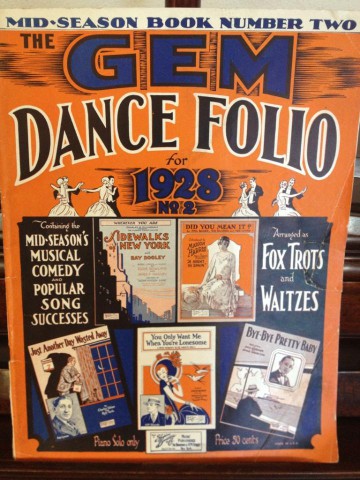
About a century ago the American composer John Phillip Sousa lashed out against a disturbing new technological phenomenon that was invading the American home: the Phonograph.
“The time is coming when no one will be ready to submit himself to the ennobling discipline of learning music…Everyone will have their ready made or ready pirated music in their cupboards.” Society would be the lesser for this, he thought since “The nightingale’s song is delightful because the nightingale herself gives it forth.” One wonders what he would say about our current ability to indulge any mood with the right music via multiple devices by just a tap.
But he had a point. Recorded music transformed us from a nation of performers into a nation of listeners, observers, spectators. It’s hard today to remember the time when you had to get up to flip an album over, much less a time when the only music you had at home was whatever you could make at home. And there really was no such thing as background music at all, unless you were wealthy enough to pay someone to come into your home and make it for you.
I thought about trying to recreate this experience by hiding my stereo remote, iPad and phone and making music on my piano ( which I can play somewhat) and my flute ( on which I am hopeless). But I kept getting distracted by the music that I was trying to play. I love old sheet music. It gives you access to the sounds of the past— the songs that were popular in their time but that didn’t enter into the popular canon – and some specimens are works of art in their own right. Sheet music art was the album cover art of its day. At a time when records were still packaged in plain brown wrappers and had bland labeling (no color on that little dog with his ear to the Victrola just yet), sheet music illustrations were bursting with color, new fonts and trendy graphics. Here are some that I love:
 Just as you can date an album by the style of its cover art, so you can date sheet music by what you see on the cover. Check out these two ladies in similar poses, one from the teens and the other from the twenties:
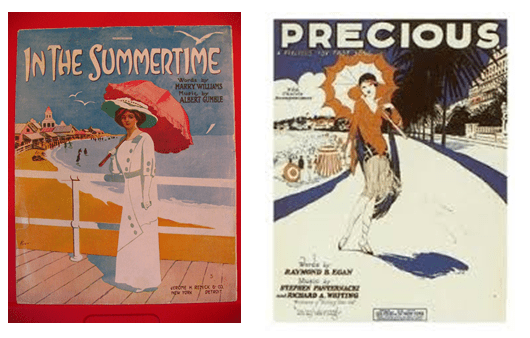
Two prosperous young white ladies, only a decade and yet seemingly worlds apart. Another decade after “Precious,” we’re here:
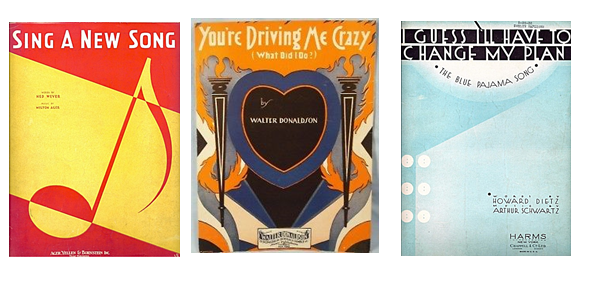
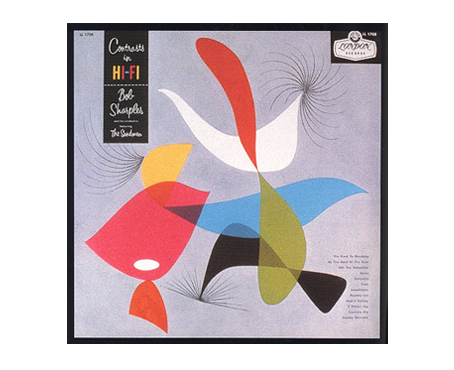
Which is not too far from this, the “first” album cover to replace the plain brown wrapper (circa 1948):
Of course, the art isn’t all on the outside. There’s a lot to learn just by opening up one of these old gems and trying to play them. I’ve been working on a piano piece called “Leonora” found in The Gem Dance Folio for 1928, No 2 which is pictured above. It’s labeled a “Russian foxtrot.” (What’s a Russian foxtrot? Google tells me it’s a kind of Soviet submarine. There are hints it has something to do with Bolshevik jazz.) I can’t find a recording of it, even in the Library of Congress’ wonderful National Jukebox. It’s a haunting piece and almost too hard for me to play (again, I’m not so good.) Maybe it flows better with vodka. Maybe I’m just being sentimental over the sounds of a lost song, that may only ever be heard again when someone takes the time, like a nightingale, to sing forth.
 helloclio
Thank God the technology came forth! Can you imagine if it hadn’t..? I’m happy with ready made music, it would be too quiet a world for me without it 🙂
LikeLike